
Introduction
The trucking industry is a high-risk business where every second counts. One wrong move on an accident scene, roadside breakdown, or hazardous delivery site can result in life-threatening injuries, potential legal liability, environmental damage, and more. That is why many of the top trucking companies are making significant investments in effective scene-management practices that safeguard motorists, emergency personnel, and citizens alike.
The best trucking companies in the business today know that safety is no longer just a regulatory mandate; it’s a business survival plan. Road safety studies indicate that commercial truck crashes result in thousands of serious injuries each year, many of which result from a lack of scene control, delayed response, and/or poor communication.
This guide explores real truck company tactics that save lives on scene, reduce operational risks, and improve emergency response outcomes. These realistic solutions can make a significant difference in making the road safer and better prepared for emergencies in any fleet, no matter what your role is.
Why Scene Safety Matters in the Trucking Industry
Truck accidents pose special risks compared to regular car crashes. Hazardous materials, oversized loads, flammable fuel, or heavy equipment can be transported by large commercial vehicles. In many cases, secondary collisions end up being more hazardous than the initial crash.
Truck companies need to react rapidly, but not out of control, with communication and compliance. A properly trained response system can benefit businesses as follows:
- Protect drivers and civilians
- Reduce fatalities
- Prevent secondary accidents
- Lower insurance costs
- Improve legal protection
- Maintain the company’s reputation
- Minimize downtime
A company that values scene safety is more likely to have reduced liability exposure and improved performance in the long run.
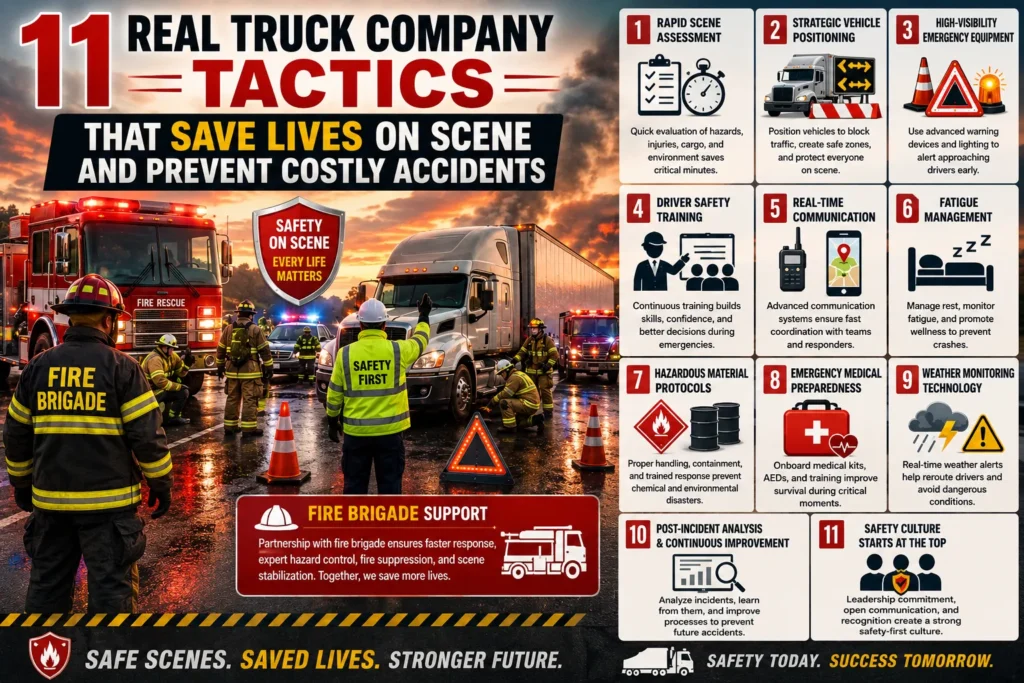
- Rapid Scene Assessment Saves Critical Minutes
The first few minutes following a trucking accident are crucial. Professional trucking companies train drivers and dispatchers to make immediate scene evaluations.
A rapid assessment typically includes:
- Identifying injuries
- Evaluating fire risks
- Checking for fuel leaks
- Monitoring traffic hazards
- Assessing cargo stability
- Reporting weather conditions
- Identifying hazardous materials
Quick information allows emergency responders to arrive prepared with the right equipment and medical resources.
Key Safety Tip
When traffic has slowed, drivers should never presume that the scene is safe. Distracted driving continues to be a major cause of roadside fatalities, with secondary impacts.
- Strategic Vehicle Positioning Prevents Secondary Collisions
Defensive positioning of the real truck company, which saves lives on the scene, is one of the best real truck company tactics.
Professional fleets teach drivers to position trucks strategically to:
- Block dangerous traffic flow
- Create safety zones
- Protect injured individuals
- Increase scene visibility
- Guide emergency vehicles
Some companies also deploy support vehicles equipped with flashing arrow boards and reflective barriers.
Why It Works
The effectiveness of warning systems in minimizing the risk of secondary crashes in active traffic areas has been shown again and again.
- High-Visibility Emergency Equipment Makes a Major Difference
Modern trucking companies equip vehicles with advanced roadside safety gear, including:
- LED emergency triangles
- Reflective cones
- High-visibility safety vests
- Portable floodlights
- Digital warning beacons
- Emergency air horns
These tools help to greatly enhance visibility during nighttime operations and in harsh weather conditions.
Essential Best Practice
Emergency warning devices should be set up farther back from the truck to allow drivers to have enough reaction time.
- Driver Safety Training Reduces Fatal Mistakes
The best trucking companies invest in training the drivers continuously instead of training them once.
Effective training includes:
- Emergency response drills
- Defensive driving
- Hazard recognition
- Fire suppression basics
- Communication protocols
- First-aid procedures
- Stress management during emergencies
Well-trained drivers remain calmer under pressure and make faster, safer decisions.
Real-World Insight
Companies with continuous safety training programs often report lower accident rates and reduced workers’ compensation claims.
- Real-Time Communication Systems Improve Coordination
Communication failures can turn manageable incidents into catastrophic situations.
Modern truck fleets use:
- GPS fleet tracking
- Two-way dispatch systems
- Mobile safety apps
- Incident-reporting software
- AI-powered monitoring tools
- Emergency alert platforms
These systems help dispatch teams coordinate medical response, reroute traffic, and provide live updates to emergency services.
Important Advantage
Real-time communication allows companies to respond proactively instead of reactively.
- Fatigue Management Programs Save Lives
Driver fatigue remains one of the most dangerous threats in commercial transportation.
Long hours, irregular sleep schedules, and stressful deadlines increase the likelihood of serious accidents.
Leading truck companies now implement:
- Electronic logging devices (ELDs)
- Fatigue monitoring systems
- Mandatory rest schedules
- Sleep health education
- Route optimization software
- Surprising Statistic
Studies have shown that fatigue can impair driving performance similarly to alcohol intoxication.
By prioritizing rest and wellness, trucking companies protect both drivers and the public.
- Hazardous Material Protocols Prevent Disaster
Hazmat incidents require highly specialized scene management procedures.
Professional trucking companies handling hazardous cargo use:
- Chemical spill kits
- Emergency isolation zones
- Specialized response teams
- Hazard identification placards
- Protective equipment
- Environmental containment systems
Drivers receive additional certifications and training to handle chemical emergencies safely.
Why This Matters
Faulty handling of hazmat can result in explosions, toxic exposure, environmental pollution, and mass evacuations.
- Emergency Medical Preparedness Increases Survival Rates
Many trucking companies now equip vehicles with advanced medical supplies, including:
- Trauma kits
- Automated external defibrillators (AEDs)
- Burn treatment supplies
- Bleeding control kits
- Emergency oxygen systems
Some fleets also require CPR certification for drivers and supervisors.
Life-Saving Benefit
Fast medical intervention during the first few minutes after an accident dramatically improves survival chances.
- Weather Monitoring Technology Prevents High-Risk Situations
Extreme weather creates deadly driving conditions for commercial trucks.
Forward-thinking trucking companies use weather intelligence systems to monitor:
- Ice formation
- Wind speed
- Flood risks
- Fog conditions
- Thunderstorms
- Wildfire activity
Dispatchers can reroute drivers before conditions become dangerous.
Smart Strategy
It is much better to keep people away from hazardous situations than to be able to deal with an emergency after it has occurred.
- Post-Incident Analysis Helps Prevent Future Accidents
The safest trucking companies continuously analyze incidents to improve future performance.
A post-incident review typically examines:
- Driver actions
- Equipment failures
- Environmental conditions
- Communication breakdowns
- Response timelines
- Safety compliance
Companies then update policies, training, and operational procedures accordingly.
Long-Term Value
Every incident becomes a learning opportunity that strengthens overall fleet safety.
- Safety Culture Starts at Leadership Level
No safety strategy succeeds without leadership commitment.
Successful trucking companies create safety-first cultures by:
- Rewarding safe driving
- Encouraging transparent reporting
- Prioritizing maintenance
- Eliminating unrealistic deadlines
- Investing in better equipment
- Supporting driver mental health
Employees perform better when safety becomes part of the company identity rather than just a policy requirement.
The Financial Benefits of Strong Scene Safety Protocols
Many trucking companies focus only on compliance, but advanced safety systems also create significant financial advantages.
Benefits include:
- Reduced legal claims
- Lower insurance premiums
- Less downtime
- Fewer cargo losses
- Better customer trust
- Stronger employee retention
- Investing in safety often delivers long-term profitability.
Common Mistakes Truck Companies Must Avoid
Even experienced fleets sometimes make dangerous errors during emergencies.
Major Mistakes Include:
Poor Driver Communication
Confusing instructions can delay emergency response and increase risks.
Inadequate Warning Devices
Low visibility frequently contributes to secondary crashes.
Delayed Incident Reporting
Waiting too long to notify emergency services can worsen injuries.
Lack of Emergency Training
Unprepared drivers often panic under pressure.
Ignoring Fatigue Risks
Overworked drivers are more likely to make critical mistakes.
Future Trends in Truck Scene Safety
The trucking industry continues to evolve rapidly.
Emerging technologies include:
- AI-powered collision prevention
- Autonomous emergency braking
- Drone-based accident assessment
- Predictive maintenance systems
- Smart highway infrastructure
- Advanced driver monitoring systems
These innovations may dramatically reduce fatalities in the coming years.
Conclusion
When it comes to saving lives on the scene, real truck company tactics are no longer a luxury; they’re a necessity for modern transportation operations. Whether it’s a quick response system, cutting-edge communication technology, driver instruction, or fatigue management, all safety measures play a role in keeping lives safe and reducing risk.
The very successful trucking companies recognize that safety is more than just not getting ticketed. It’s about establishing a culture where drivers, responders, and communities are safe in all roadside emergencies.
Businesses that invest in proactive scene safety strategies gain operational stability, stronger reputations, lower costs, and most importantly, the ability to prevent tragedies before they happen.
The trucking industry is constantly changing, and those companies that focus on life-saving strategies now will be at the forefront of what the future of transportation will look like.
Frequently Asked Questions
Frequently Asked Questions
What is the most important truck scene safety tactic?
Why are secondary accidents so dangerous?
Secondary accidents are frequently caused by drivers who don’t see stopped vehicles, debris, or emergency personnel. These collisions can be more severe than the initial collision.
How do trucking companies improve emergency response times?
What role does technology play in trucking safety?
Technology can keep companies updated on driver activities, anticipate hazards, enhance communication, optimize routes, and minimize accident risks by analyzing data in real time.
How often should truck drivers receive safety training?
Industry experts recommend continuous training throughout the year, including refresher courses, emergency drills, and updated compliance education.
Are smaller trucking companies able to implement these tactics?
Yes. Even small fleets can improve scene safety through driver training, better communication tools, emergency equipment, and structured response plans.