
Metabolic Syndrome, also known as Metabolic Dysfunction, driven by Insulin Resistance. Terms rarely heard in western medicine. Yet nearly 90% of the United States population has it. So, what is it? What does it mean?
The fire service is not immune. Most of us know someone who has faced cancer, an arrhythmia, a heart attack, or another serious chronic condition. These outcomes have many causes, but poor metabolic health has a profound effect on the risk of chronic disease.
Company officers have a responsibility to mentor and coach their people, especially younger members. Building a health culture means treating nutrition, exercise, sleep, and prevention as essential parts of readiness—not optional interests pursued off duty. But how do we do that? Where do we start?
Traditional firehouse culture often includes donuts on the counter, ice cream in the freezer, heavy meals, and workouts skipped when the shift or home life gets busy. Those habits seem harmless in isolation. Over time, however, they helped to undermine my health. This is the story of how I recognized the problem and changed course.
I began my fire-service career in the 1980s, when fitness mattered just as it does now. What follows is my experience, supported where possible by research but also shaped by personal opinion.
My Metabolic Journey: How Conventional Care Failed Me—and Curiosity Helped Me Rebuild
Disclaimer: This is a personal account, not medical advice. Medication or treatment changes should be made with a qualified clinician.
In the beginning
In 2010, I was 46 years old. 24 years working in the fire service. Working as a Truck Captain at one of the busiest firehouses in the city. I was supervising 6 on-duty members. We had a great crew – Life was good!
But then I had an annual physical and my primary care physician (PCP) convinced me that I had two options to deal with my “high cholesterol”… go on a statin for the rest of my life or change my lifestyle to a vegan diet. I chose to go on the vegan diet. I managed this diet for approximately 6 years. Although not a pure vegan diet. I often ate processed food like bread, tortilla chips, cookies, etc… my understanding was “as long as nothing came from an animal source, it must be okay”. I was told by my doctor, “if the food comes from an animal, it has cholesterol”. And I was told that protein is overrated and that the human body really doesn’t need more than 10-20 grams per day. Foolishly I followed those “rules of thumb”. That doc retired around 2016 and I found a new PCP.
Pharma found me
Around 2018, while working in an administrative role, I experienced a mild arrhythmia and was referred to a cardiologist. When I asked why I was having problems at 54, he replied, “Nobody lives forever.” You have to understand, I didn’t think there was anything wrong with me. The comment didn’t sit right with me. Nevertheless, I submitted.
Testing included an echocardiogram and a coronary artery calcium (CAC) scan. My CAC score was about 130, indicating calcified plaque in the coronary arteries. I began lisinopril (ACE inhibitor) for blood pressure and atorvastatin for cholesterol. At the time, I accepted the plan without asking broader questions about my metabolic health.
Near death experience
In summer of ‘22, I was stung by a bee. A yellow jacket got me on my forearm. I nearly died due to a massive drop in my blood pressure (anaphylactic shock). A blood pressure of 50/p is usually a reason to begin CPR. Yet I was still conscious, barely. I’m so grateful to our local firefighters and medics who administered epinephrine and managed to bring my BP back. But it was pretty unnerving when I heard one of them say, “get the bag ready”.
I later began venom immunotherapy. My allergist changed my blood-pressure medication because ACE inhibitors can complicate severe allergic reactions. A subtle indication that I was not getting full disclosure on the medicine I was prescribed.
I may always have had some sensitivity to bee venom, but these events reinforced the importance of understanding medication risks and overall health. I now receive maintenance venom-immunotherapy injections.
Second CAC/Labs
In May of 2024, I underwent another CAC (my second) at the request of my cardiologist. The results were not desirable with a score of 177… 47 points higher than my first test, five years earlier.
I also discovered in a subsequent blood test that my lipoprotein(a), or “Lp(a)”, level is high. This is a lipid subset of LDL cholesterol that has been associated with higher risk of cardiovascular disease (CVD). It is mostly hereditary but can be influenced by diet/exercise.
Lp(a), lipoprotein(a) is a major genetic risk factor for heart disease and one of the most talked-about topics in modern cardiology. It plays a significant role as a risk factor for cardiovascular disease and is thought to be largely genetically determined.
A later blood panel indicated I also have the gene mutation, MTHFR.
MTHFR stands for Methylenetetrahydrofolate Reductase. It plays a critical role at a fundamental biochemical pathway occurring billions of times every second in every cell. It can cause elevated Homocysteine, another risk factor for CVD. Common in 40-60% of the population.
Following the scan results my cardiologist wanted me to achieve an LDL of 60 with PCSK9 Inhibitors and increasing my statin dosage. Nobody requested an advanced lipid panel… I had to insist on one myself. Nobody asked for a metabolic lab test to check advanced markers like Homa-IR or fasting insulin. Instead, it was “Here, take this drug…we gotta get your LDL lower”. So, I met with the Lipid Management department at my local hospital but…I hesitated… something was telling me to STOP. So, I did just that. I stopped short of changing medications and increasing my dose of Statin. I was on-board with doing whatever it takes to overcome this, but something just seemed wrong.
Nobody tested my fasting insulin. Nobody tested my cortisol. Nobody asked about my stress. Nobody checked my hs-CRP. Not that I knew the importance of those biomarkers at that point. They just focused on one number…LDL.
Yet, something was not right
After my CAC results came out, I decided to do some research on my own. I had too many questions but always the same answers from the doctors and nurses. “It must be hereditary”.
But still I wondered, how did this happen? Why was I bordering on being sick with Cardiovascular Disease (CVD) at the age of 60? I had been on a statin for 6 years… I should be protected, right? I wasn’t eating horribly (so I thought), so why was I going down the road of having a cardiac event in the next 5 years?
Come to find out, I was also pre-diabetic (insulin resistant) and no one ever pointed it out until visiting a nutritionist. A nutritionist with an undergraduate degree brought it to my attention after looking at my lab results. My PCP never mentioned it… My cardiologist never mentioned it. My A1c was 5.8. Not incredibly high, but high enough that it should have been a red flag. An A1c level over 5.7 is considered prediabetic. And since nobody was checking my fasting insulin, there was no indication that I was insulin resistant.
Risk Factors
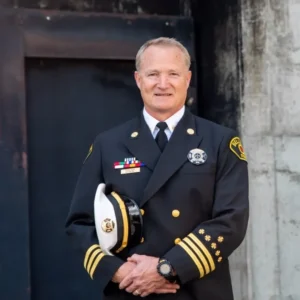
I am now retired and 62 years old (as of this writing). My fire service career of 35 yrs ended where I thought I was healthy. But I wasn’t. The fire service was an amazing career. I was “all in”. I went through the ranks retiring as a battalion chief. But my career, like everyone else working in the fire service, I lived with inherent risk factors for cardiovascular disease and cancer.
- Shift work resulting in poor sleep
- Poor metabolic diet causing high Blood Pressure
- Poor metabolic diet causing inflammatory conditions (cholesterol issues and insulin resistance)
- Moderate alcohol consumption (off-duty of course)
- Job stress
- Non consistent exercise
- Evident visceral belly fat with a BMI ranging 26-27 (203-212 lbs).
- Toxic exposures
The summer of ‘24
I want to be fully transparent about how unhealthy I was prior to this awakening. I racked up nearly $6000 of my deductible from doctor visits. But it wasn’t just my cardiac concerns and learning of my prediabetes.
I had:
- Skin tags on my back
- Keratosis on my face
- Cysts and boils between my legs on occasions
- Sciatica lower back (‘22)
- A nodule on my thyroid (discovered from a cancer screening and later determined to be benign)
- Bee sting allergy (as mentioned)
- An elevated PSA
- High blood pressure
- Arthritis in my neck
My Discovery
The doctors all said my CVD condition was hereditary. My mom had high blood pressure; my dad had high cholesterol. But what I discovered is that it was all due to: “Metabolic Syndrome”
- Metabolic Syndrome, also known as Metabolic Dysfunction, is a group of five conditions that can lead to heart disease, diabetes, strokeand other health problems like cancer. The root cause of metabolic syndrome is Insulin Resistance. Insulin resistance is a state where your body’s cells – especially your muscle, fat, and liver cells – become less responsive to the hormone Insulin.
Metabolic syndrome is diagnosed when someone has three or more of these risk factors:
- High blood glucose(sugar)
- Low levels of HDL(“good”) cholesterol in the blood
- High levels of triglyceridesin the blood
- Large waist circumferenceor “apple-shaped” body, an indication of visceral fat around internal organs
- High blood pressure
There were periods where I had all five conditions… all leading up to and causing Metabolic Syndrome. How did I get here?
- 60 years eating Standard American Diet (processed foods laced with seed oils) leading to Insulin Resistance.
- 6 years on a vegan diet (low protein, low fat, and lots of processed foods, and sugar)
- Followed by years of taking pharmaceuticals…statins and BP lowering meds, screwing up my metabolic health… destroying my mitochondria.
- 35 years in the fire service living with heightened risk factors.
Deep Dive
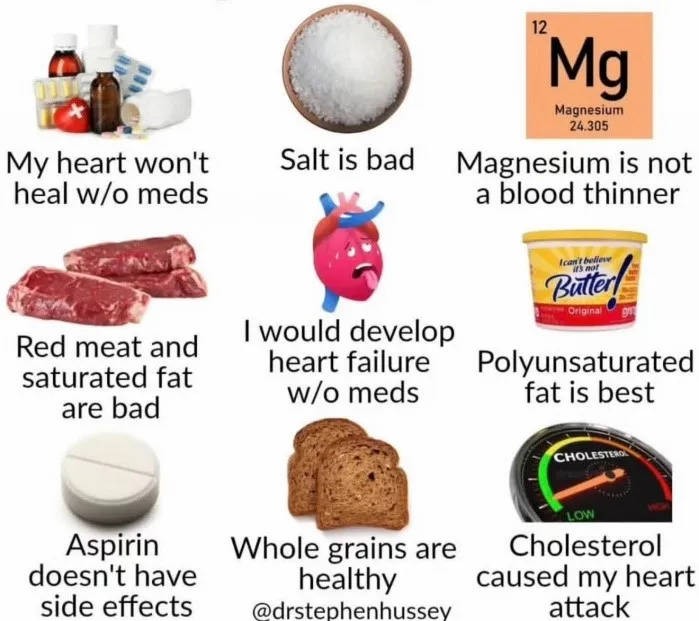
What I discovered was “eye opening” and at times “jaw dropping”. Hidden away on YouTube videos, podcasts, books, and posts on X (formerly Twitter), I discovered that I was not alone, and I was not being told the truth. Misinformation my doctors told me:
Why you should question
Cholesterol, in general, is not the sole cause of CVD… it is only a symptom (guilty by association). High blood pressure is not entirely hereditary. The root cause, the driver of most all chronic disease as well as CVD is sugar and seed oil (sugar causing insulin resistance and seed oils causing oxidation and inflammation).
See: https://www.academia.edu/2994-435X/2/2/10.20935/AcadMed7786
The first time I heard someone state that cholesterol was actually good for you and important for overall health, I was astounded, but still very skeptical. All my life, the narrative was LDL cholesterol was bad and was the driver for heart disease. That narrative is to the delight of pharmaceutical companies pushing statin drugs. A billion dollar industry.
Ask yourself, why is it that we have “the cure all” for heart disease (Statins), yet heart disease is still the number one cause of death in the US?
Is it possible that cholesterol is not the driver of CVD? Is it possible that Metabolic Syndrome is the true cause? Yes, it absolutely is possible and I believe we’ve been fed a lie. We’ve been conditioned to believe that high cholesterol = heart attack = death. Except that’s not the whole story. Not even close. Let me walk you through what I’ve learned after a little over a year of actually digging into the research.
The Framingham study – the root cause of heart disease
Your doctor has probably never mentioned this. Findings from the Framingham study show that the strongest predictors of heart disease are insulin resistance, inflammation, metabolic syndrome, and the Triglyceride/HDL ratio. Research found that people with low LDL but high triglycerides carried significantly MORE risk than people with higher LDL but low triglycerides.
Your triglyceride-to-HDL ratio is a far better predictor of heart disease than your LDL cholesterol number.
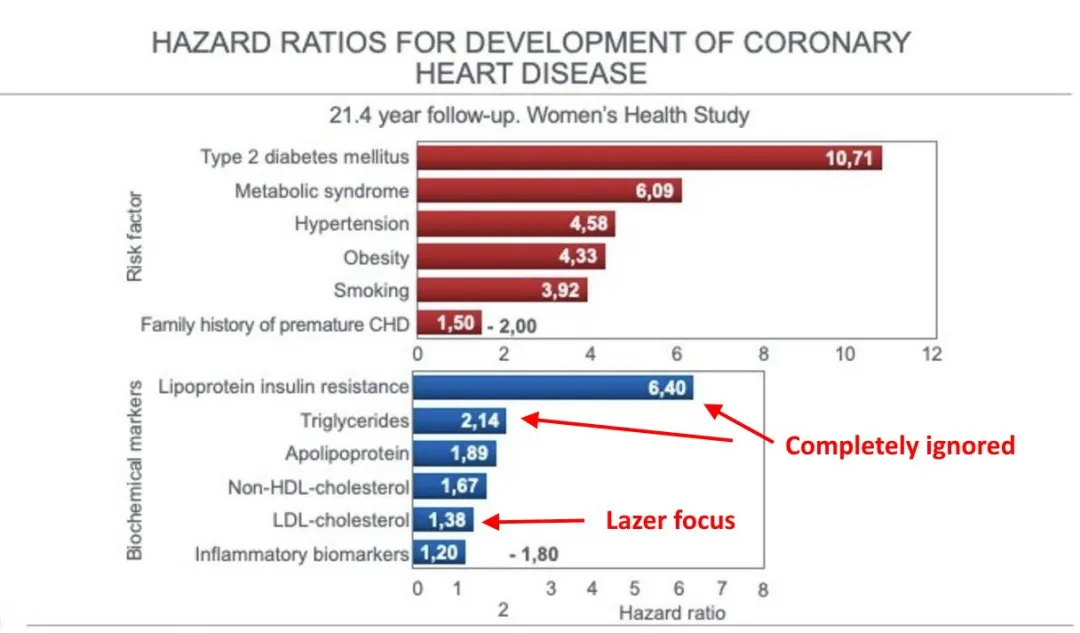
And what drives high triglycerides? Sugar. Processed carbohydrates. Seed oils. Not the steak on your plate. I was always told it was the burger that was going to kill me… it was actually the bun!
Then there’s insulin resistance, inflammatory markers, metabolic health — all of these matter infinitely more than a single LDL number on a lab report. But nobody talks about them.
Statin use went from 2% of American adults in the early 1990s to 35% by 2019. That’s 92 MILLION Americans on cholesterol-lowering medication. And heart disease is STILL the number one killer. Type 2 diabetes has exploded. Obesity has tripled. Metabolic Syndrome is everywhere. More statins. More low-fat food. MORE disease.
The reality is your body NEEDS cholesterol. It makes your cell membranes. It produces your hormones. It creates vitamin D. Your brain runs on it. Other studies like the Ridker 2005 (Women’s Health Study N=15,632), the Sachdeva 2009 (American Heart Journal N= 136,905), and the Ravnskov 2016 (BMJ Open N=68,094) back up these claims.
So, the next time someone tells you your cholesterol is going to kill you, ask them:
- What are my triglycerides?
- What’s my triglyceride-to-HDL ratio?
- What are my inflammatory markers (hsCRP)?
- What is my fasting insulin? Am I insulin resistant?
- What genetic factors do I carry? Lp(a)? MTHFR?
Being told only that “your cholesterol is high” is like being told that a fire alarm is sounding without identifying the room, the fuel, or the conditions. Context matters.
The Truth:
Saturated Fats & Dietary Cholesterol Have No Effect on CVD Outcomes, Including Heart Attacks, Strokes, CVD Mortality & Total Mortality.
The greatest myth in the field of medicine is that there is a relationship between high total cholesterol & heart disease–it does not exist.
A low carbohydrate diet prioritizing nutrient dense animal foods, eliminating harmful seed oils, sugar & processed foods provide the best healthy cholesterol profile.
This approach keeps Triglycerides low & HDL high, which is one of the best Cardio Biomarkers for Cardiac health. TG/HDL ratio optimally should be less 1.5 or less.
The Takeaway
Cholesterol has necessary roles in hormone production, brain health, cell repair, and immune function. Cardiovascular risk is more complicated than labeling “all cholesterol harmful”.
For me, improving metabolic health became the foundation, while lipid results remained only one part of a broader clinical discussion.
Genetics
Have you been tested for Lp(a) and MTHFR? What if the reason you are exhausted following a shift is due to a gene mutation rather than getting up at 03:00hrs for that patient assist?
Yes, I have a vulnerability towards CVD based on my Lp(a) and MTHFR genetic disposition. You may as well.
But let’s be clear, our choices, made consistently, can shape the trajectory of our health more than our genes ever could. The choices I have are pretty clear. Knowledge is power—and, knowledge can also be motivation. Over time, I’ve come to see that knowledge isn’t a burden, It’s a privilege.
“A predisposition is just that—a vulnerability, not a destiny.”
-Nick Norwitz
My “scarlet letter”
My last CAC was my wake-up call (I call it “my awakening”). Although there are claims that a person can reverse their CVD, unfortunately I believe I will have to live with a positive score for the rest of my life… a score that cannot be reversed… it’s a “scar”. All I can do now is work to improve my vascular health by eating clean and exercising.
My cardiologist wanted me to double down on my cholesterol management. A step that would have taken me to a world of chronic health issues, where I would be dependent on pharmaceutical care, and eventually have led me to my grave. To be clear, I’m not bitter about being led the wrong way. I’m grateful that I eventually was Blessed with insight and understanding. I can’t change the past, I can only change the future.
“The aging you want tomorrow begins with the choices you make today.”
-Mark Hyman
The Low Carb Diet
Knowing what I know now… Health is not built in a pharmacy. Health is dependent on me and my choices. I am currently on a metabolically healthy diet and exercising everyday. After 60 years of eating processed foods, I’m beginning to heal. I am now a “Lean Mass Hyper Responder”… and no longer insulin resistant.
- No sugar, very Low carbohydrates (only carbs found in whole foods like berries and some vegetables).
- No processed food (no grains, no chips, no bread, no crackers, etc.)
- No seed oil
- No alcohol (except an occasional glass of wine)
- Eating healthy protein and fats (no seed oil), like grass fed beef, pasture raised eggs, chicken, wild caught fish, and other seafood
- Eating fruit like avocados, nuts, seeds, berries, and vegetables like leafy greens.
- Intermittent fasting (ideally a six hour eating window, ie. Between 10 o’clock and 4 o’clock)
Motion Is the Lotion
Retirement gives me more control over my schedule, and I now move every day. My goals include:
- Running, pickleball, or softball
- Resistance training two or three days each week
- Walking three to four miles, sometimes with a weighted vest and often after meals
- Active hobbies such as golf, e-biking, hiking, and pickleball
Even on recovery days, I walk. My BMI is now about 24 at 183–185 pounds, roughly 10–14% below my starting weight.
It’s all about Metabolic Health
Before this journey I had never heard of Metabolic Health, or if I did, I had no idea what it was. But it clearly makes sense now. We have never seen so much chronic diseases in human history. Yet, let’s correlate that with… we have never seen so much ultra processed foods (UPF) in human history. Add the two together and what do you get? A probable (some might say, certain) impact of UPF on human health.
There are multiple studies that show that controlling your insulin levels and improving overall metabolic health through diet and lifestyle shifts isn’t just about preventing diabetes or heart disease; it’s profound strategy against cancer as well. The Venkateswaran 2022 (Nature Reviews Cancer, Seyfried 2012, The Warburg Effect – all signal that cancer cells rely almost exclusively on glucose, solidifying cancer as a metabolic disease. Not a root cause, but a significant contributor.
What I’m doing
My diet is a “whole food diet” (low carb, high healthy fat, high protein – nothing processed). Simply removing ultra processed my food from your diet (which is nearly everything in the middle of a grocery store), you will be half way there to being metabolically healthy… in my opinion. But see for yourself in this British Medical Journal article:
To conclude
For being 62yo, I feel great. My Function Health biological age is 49 !!! (Functionhealth.com). And I feel confident that my body is now functioning well. Kind of like putting good fuel in your car vs. crappy fuel. Does the car run better? Does it idle smoothly and accelerate faster?
When we are not healthy, it feels like we are restricted. We feel old. That we can’t fully enjoy life and do the things we want. When we have our health, we have many more options and freedoms.
It got me thinking about many of the freedoms of having a healthy body brings to a person’s life. It is absolutely critical as a firefighter to be metabolically healthy.
We want to make it to retirement. And as we begin our retirement years… a healthy mind, body and spirit allow for freedom.
I’ve seen too many of my brothers and sisters in the fire service wait for a crisis before making changes; I did. Do not wait until you are 60 to learn your numbers or assess your habits. A favorable test does not guarantee perfect health, and an unfavorable one does not make improvement impossible.
Furthermore, you are in charge of your health. Not your doctor. Think of your doctor as you would a financial advisor. It’s your money, and you can either choose to follow the advice of your financial advisor or seek out other information. But ultimately, you make the decision for how you earn, spend, and save. That is how you should manage your health decisions.
Final Thoughts and Advice
Changing long-standing habits can feel lonely, especially when firehouse routines and the surrounding food environment pull in the opposite direction. I will not claim that my exact diet is the answer for everyone. You can be carnivore, keto, or vegetarian… I don’t care. I do know that eliminating processed food, eating enough protein for my body weight, moving consistently, sleeping better, managing my gene mutations and stress, and knowing my risk markers have improved my life.
I will not return to the habits that left me metabolically unhealthy. My hope is that this story encourages firefighters to act earlier, ask better questions, and make sustainable changes before illness forces the issue.
If my personal story intrigues you, I recommend a book called Unplugged, by Mark Kaplan. Mark was a professional tennis player at the peak of his game, when he suffered a heart attack. He is now the founder and CEO of Health Truth and the creator of Neo, the world’s first AI built on root cause health science.
Building a Firehouse Health Culture
A culture of healthy eating, exercise, sleep, and prevention is as important to operational readiness as tactical training. Cancer, cardiovascular disease, and other chronic conditions have affected too many firefighters and families to treat health as a private afterthought.
Company officers, encourage every member to:
- Test, don’t guess: know your blood pressure, waist measurement, glucose or A1c, fasting insulin, triglyceride/HDL ratio, and other markers recommended for individual risk.
- Build meals around minimally processed foods. Better yet, eliminate ultra processed foods completely from your diet and eliminate added sugar, refined carbohydrates, and other foods that undermine your personal goals. Stop eating fried foods.
- Move every day, including regular resistance training and walking; protect sleep and recovery; and involve qualified clinicians in major treatment decisions.
Company officers should model these behaviors, make healthy options the norm at the firehouse, and create a culture in which asking for help is a sign of readiness—not weakness. Again, as much as we want to shake our people into submission (for their own good), we can’t. We need to empower them to make their own decisions. It’s about:
- Creating the awareness
- Leading by example
- Providing encouragement along the way